
African central bank governors have raised concerns that the current global debt system is not adequately addressing the continent’s growing economic challenges.
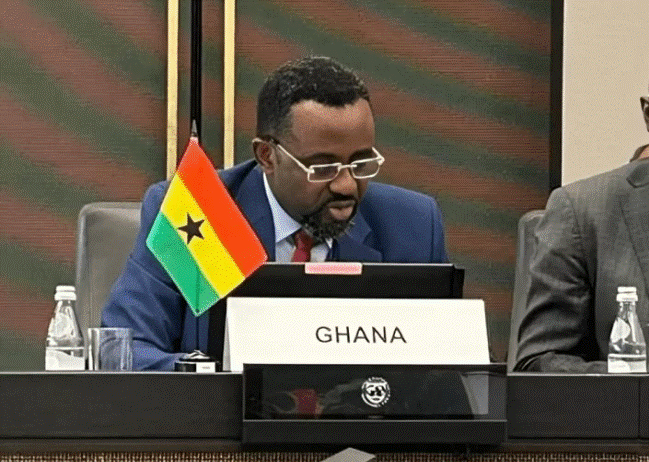
Speaking at the African Consultative Group meeting held during the IMF Spring Meetings in Washington, D.C., the Governor of the Bank of Ghana, Dr. Johnson Asiama, called for immediate reforms to better support vulnerable economies.
He emphasized the need for a more effective Low-Income Country Debt Sustainability Framework, along with faster and more tailored implementation of the Three Pillar Approach to assist countries already facing, or at risk of, debt crises.
The African Consultative Group, which brings together finance ministers, central bank governors, and senior IMF officials, serves as a platform for African policymakers to coordinate and engage on pressing economic issues.
Dr. Asiama highlighted that many African economies are currently dealing with tight global financial conditions, rising debt risks, and repeated climate-related shocks. He added that these challenges have been worsened by spillover effects from the Middle East conflict, contributing to higher inflation and strained external balances.
He stressed the importance of ensuring that IMF emergency financing facilities remain adequately funded, responsive, and easily accessible to countries experiencing balance-of-payment pressures.
Beyond debt restructuring, he urged the IMF to make greater use of its financial resources to help countries manage multiple economic shocks while investing in long-term resilience. This includes increasing concessional financing, expanding the reallocation of Special Drawing Rights, and reforming support mechanisms to make them more efficient.
Dr. Asiama also underscored the need for stronger support to help African nations regain access to international capital markets and build capacity in key areas such as revenue mobilisation, debt management, and financial regulation.
He further called on the IMF to play a more active role in restoring market confidence through clear policy direction, collaboration on credit enhancement tools, and programmes designed to attract private investment at sustainable costs.
His remarks reflect broader concerns among African leaders that global financial systems are not evolving quickly enough to meet the continent’s increasingly complex economic realities.
Source: 3news.com