

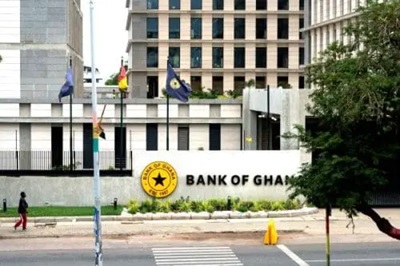
Ghana’s banks and fintech firms are now required to prove that the artificial intelligence systems they use—for fraud detection, credit scoring, and customer service—are transparent, fair, and secure, following a major new regulatory directive introduced by the Bank of Ghana.
The requirement is part of the Cyber and Information Security Directive (CISD) 2026, launched in Accra in late March. The framework represents the central bank’s first comprehensive effort to regulate the use of AI and machine learning within the country’s financial sector.
Governor Johnson Pandit Asiama described the directive as a necessary step forward, noting that while AI and mobile money have improved financial inclusion, they have also introduced risks that older regulations—such as the 2018 framework—were not designed to address. He emphasised a shift toward stronger, collective cyber resilience across the industry.
Under the new rules, financial institutions can no longer deploy AI systems without oversight. They must show that their algorithms produce explainable outcomes, operate without bias, and are protected against manipulation or cyber threats.
This marks a significant shift for an industry where AI is already deeply embedded. Many banks in Ghana rely on machine learning to detect suspicious transactions, evaluate loan applications, and automate customer service. Now, these systems must be backed by formal governance structures, including clear documentation and routine audits to ensure they function as intended.
The directive places particular emphasis on fairness in credit scoring. Since automated lending decisions affect access to finance for millions, regulators are concerned that models trained on historical data could reinforce existing inequalities if not properly monitored.
CISD 2026 applies to all institutions regulated by the Bank of Ghana, including commercial banks, microfinance companies, and payment service providers. While a proportionality approach will tailor requirements based on the size and risk level of institutions, detailed technical guidance—especially on AI governance—has yet to be fully released.
This lack of clarity is already raising concerns, particularly among smaller fintech firms that depend on third-party AI tools and may find it difficult to meet strict documentation and audit requirements. The central bank has indicated that further guidance will be issued in due course.
Ghana’s move aligns with a broader global trend, as regulators in regions such as Europe, the United Kingdom, and parts of Asia increasingly demand accountability in algorithmic decision-making, including explainability and bias testing.
Ultimately, the success of the directive will depend on how effectively it is implemented. Many institutions will need to invest in technical expertise and governance systems to comply, and the Bank of Ghana’s supervisory approach in the coming months will determine whether the policy leads to meaningful change or remains largely aspirational.
Source: newsghana.com.gh