
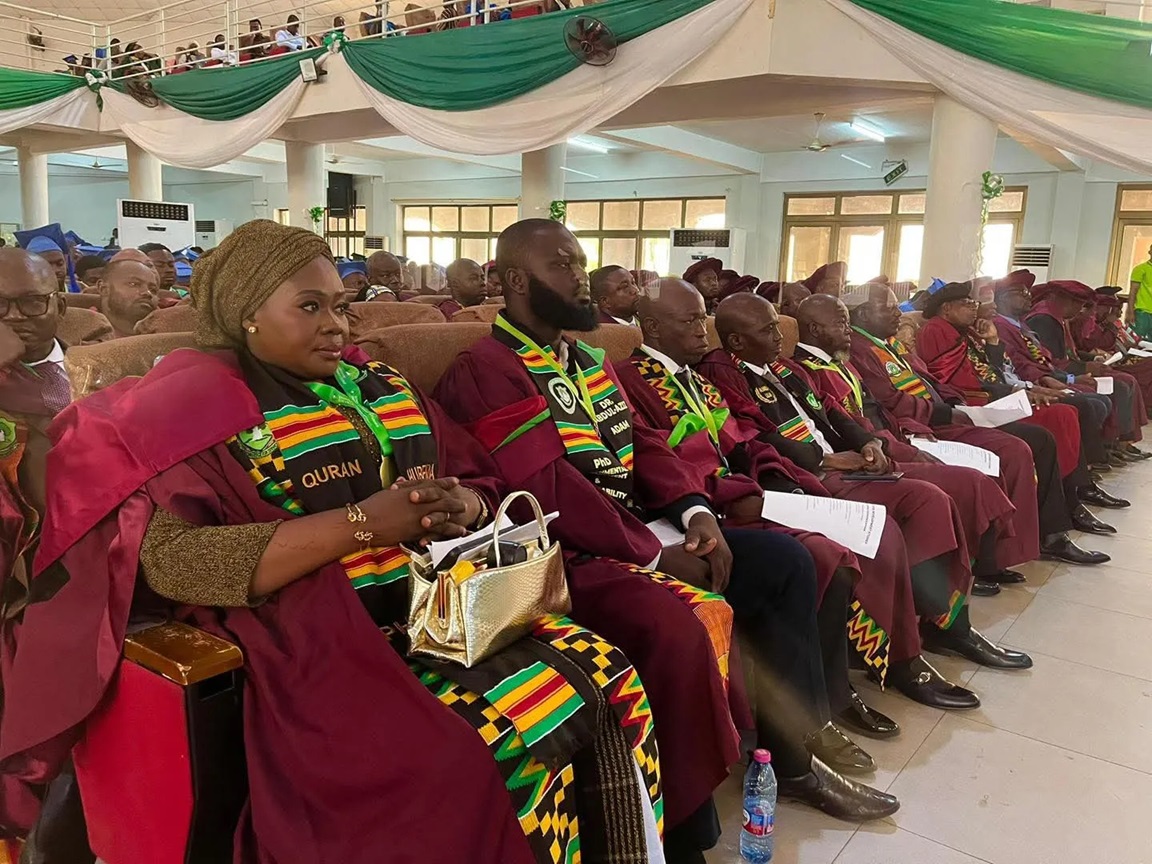
During a special congregation held in Tamale, reaffirming the institution’s commitment to training professionals to drive development—especially in underserved communities.
The ceremony brought together graduates, faculty, families, and dignitaries, marking another milestone in UDS’s mission to bridge the development gap between northern Ghana and other parts of the country.
Addressing the gathering, Vice-Chancellor Seidu Al-Hassan urged graduates to see their achievements not just as personal success, but as a call to national service. He encouraged them to return to their communities and take up transformative leadership roles to help tackle poverty, ignorance, and disease.
According to him, the true value of education lies in its application—improving lives, strengthening local economies, and promoting sustainable development.
“You must become change-makers in your communities, leading efforts that promote self-sufficiency, enlightenment, and social transformation,” he said.
Graduates received bachelor’s and postgraduate degrees across disciplines such as agriculture, social sciences, health sciences, and development studies.
Some graduates described the Vice-Chancellor’s message as both challenging and motivating, noting that it underscores the responsibility that comes with higher education.
One standout graduate, Hubaida Abdulai, who earned a PhD in Agricultural Economics, shared her story of resilience—successfully balancing her studies with pregnancy and childbirth.
“It has not been easy, but it has been worth it,” she said, encouraging other women to pursue their academic goals despite challenges.
Another PhD graduate in Agricultural Economics, Abdul Rashid Yahya, expressed gratitude to his lecturers and supervisors for their mentorship and support.
The special congregation highlights UDS’s growing role in producing skilled professionals equipped to address key development challenges in Ghana, particularly in agriculture, food security, and rural development.
Source: gbcghanaonline.com