
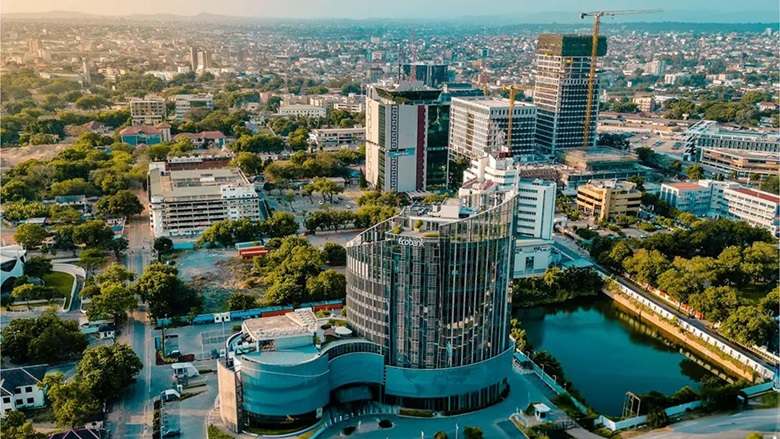
Ghana’s economic recovery is becoming increasingly visible. Inflation has eased to multi-year lows, the cedi has shown notable resilience, and GDP has surpassed the $100 billion mark for the first time. Yet, according to the Sompa National Risk Dimension Report (Q1 2026), this stability—while real—remains fragile and potentially misleading.
The central finding is clear: Ghana is not transitioning into a low-risk environment, but rather into a more complex and layered one. For businesses, this means that traditional assumptions about stability and risk need to be reassessed.
The illusion of stability
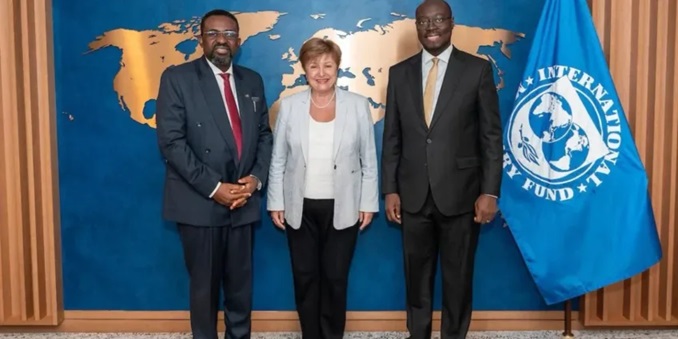
What underpins Ghana’s current macroeconomic calm is what the report terms “Manna Stability”—a condition driven largely by favourable commodity prices, particularly gold, alongside short-term fiscal discipline under the International Monetary Fund programme.
While these factors have delivered visible gains, they have not yet translated into deep structural resilience. With the IMF programme expected to end in August 2026, the real test will be whether Ghana can sustain stability without external support.
Environmental risk becomes economic risk
Environmental and climate-related threats have emerged as the most severe risk dimension. The expansion of illegal mining (galamsey) is no longer just an ecological concern—it is now an economic one.
With significant land degradation and water pollution, the consequences are already affecting supply chains, regulatory compliance, and export potential. For sectors such as agriculture, mining, and food processing, environmental risk is now a direct operational challenge rather than a distant concern.
Rising security pressures
Security risks are also intensifying. Ongoing tensions in Bawku, the growing nexus between illegal mining and organised crime, and potential spillovers from instability in the Sahel are reshaping Ghana’s risk landscape.
These are not isolated incidents—they represent structural pressures that could disrupt business operations, particularly for companies with exposure to northern Ghana.
A fragile economic and financial outlook
Despite strong headline indicators, underlying vulnerabilities remain. The current stability is supported by temporary conditions, including IMF backing, strong commodity prices, and fiscal restraint.
However, risks persist in key areas such as the energy sector, cocoa financing, and exposure to global commodity shocks. The concern is less about immediate disruption and more about the possibility of reversal—especially in a post-IMF environment.
Weak risk controls
A critical gap identified in the report is between risk exposure and the capacity to manage it. Institutional frameworks remain limited in their ability to effectively contain emerging threats.
For businesses, this underscores a key reality: risk management cannot be outsourced. It must be internal, structured, and continuously updated.
Regulatory and infrastructure strain
Legal and regulatory risks, while moderate, are becoming less predictable. New frameworks—ranging from digital asset regulations to AI-driven customs systems—are reshaping compliance requirements in real time.
At the same time, infrastructure challenges are becoming more pronounced. Fibre optic disruptions, limited 5G rollout, and system downtimes are increasingly affecting productivity. Digital reliability, once assumed, is now a core operational risk.
Human capital constraints
Ghana’s labour market presents a paradox: high unemployment alongside persistent skills shortages. Businesses are struggling to find talent in digital, technical, and AI-related fields, creating a structural constraint on growth.
This mismatch means companies must invest more deliberately in workforce development to remain competitive.
What this means for businesses
The report does not suggest pessimism—it calls for adjustment. Ghana remains an attractive and viable market, but the environment is shifting.
Risk management must move from the margins of strategy to its core. Businesses need continuous assessment of both internal vulnerabilities and external exposures, especially as the country approaches its transition from IMF support.
Operational resilience is becoming as important as efficiency. Supply chains must be evaluated not just on cost, but on their ability to withstand disruptions—from environmental shocks to security challenges and infrastructure limitations.
At the same time, firms must adapt to a changing labour market by investing in skills development aligned with emerging economic demands.
A recovery that must be managed
Ghana’s recovery is real—but it is not yet deeply rooted. The next phase will not be defined by stability alone, but by how effectively that stability is protected and sustained. For businesses, the difference between growth and disruption will come down to preparation, adaptability, and a more sophisticated approach to risk.
Source: thebftonline.com