
The Minerals Income Investment Fund (MIIF) has recorded an impressive revenue performance in 2026, mobilising more than GH¢9 billion in mineral royalties and exceeding its GH¢6.9 billion target with two months remaining in the year.
The achievement represents an increase of over 30% above the stated target, highlighting significant growth in Ghana’s mineral revenue mobilisation.
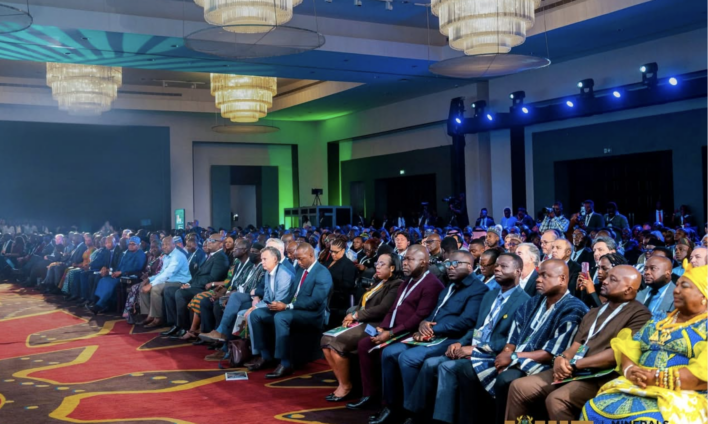
Chief Executive Officer of MIIF, Justina Nelson, announced the development on Monday, November 16, 2026, during the maiden Invest Ghana Summit held at the Kempinski Gold Coast Hotel in Accra.
Speaking at a session focused on mining, minerals and downstream value addition, she attributed the performance to improved revenue collection, increased gold production and changes to the country’s mineral royalty framework.
Mineral Royalty Revenue Records Significant Growth
According to Mrs Nelson, Ghana’s mineral royalty receipts have experienced substantial growth over the past six years.
Revenue increased from GH¢1.25 billion in 2020 to GH¢5.43 billion in 2025, representing a 334% rise.
The Fund also recorded a profit of GH¢1.1 billion in 2025, reflecting improvements in its financial performance.
With royalty collections exceeding GH¢9 billion by October 2026, MIIF has achieved a significant milestone in its efforts to maximise the economic benefits Ghana derives from its mineral resources.
The performance demonstrates the growing contribution of the mining industry to domestic revenue mobilisation.
Gold Production Increases by 23.41%
The improvement in royalty collections has been supported by increased gold production across the country.
Mrs Nelson disclosed that Ghana’s gold output rose from 4.82 million ounces in 2024 to 5.94 million ounces in 2025.
This represents a 23.41% increase in annual production.
Small-scale mining contributed approximately 3.11 million ounces, accounting for 52.4% of the country’s total gold production in 2025.
The figures highlight the significant role of small-scale miners in Ghana’s mining industry and the importance of effective regulation and revenue collection across the sector.
New Royalty System Supports Revenue Mobilisation
The MIIF Chief Executive identified the government’s sliding-scale royalty regime as another factor contributing to the growth in mineral revenue.
Under this arrangement, applicable royalty rates adjust in response to changes in mineral prices, allowing the state to capture a greater share of revenue when market conditions improve.
The system is intended to strengthen government earnings from mineral extraction while supporting more effective management of the country’s natural resources.
Mrs Nelson explained that improved revenue mobilisation must be accompanied by responsible investment decisions to ensure that mineral wealth contributes to sustainable national development.
MIIF Shifts Focus Towards Local Mineral Processing
Beyond collecting royalties, MIIF is seeking to strengthen Ghana’s participation in mineral processing, refining and manufacturing.
The Fund is positioning its investment activities to support the country’s transition from exporting predominantly raw minerals to developing industries that add value locally.
This approach is expected to create opportunities for industrial development, employment and greater participation by Ghanaian businesses in the mining value chain.
Mrs Nelson encouraged investors to explore opportunities beyond mineral extraction, particularly in processing facilities, mining infrastructure, technology and related industries.
She emphasised that Ghana’s mineral resources should generate lasting economic opportunities rather than benefits limited to raw material exports.
Government Announces US$1.5 Billion Mineral Processing Investment
The Fund’s revenue performance comes as the government prepares to expand Ghana’s mineral processing industry.
Presenting the 2027 Budget Statement to Parliament on November 12, Finance Minister Dr Cassiel Ato Forson announced plans to invest US$1.5 billion in mineral processing and value addition.
The proposed investment will focus on four major minerals: gold, manganese, bauxite and lithium.
The initiative is intended to strengthen domestic industries, create employment opportunities and reduce Ghana’s dependence on exporting unprocessed mineral resources.
By expanding local processing capacity, the government hopes to retain more economic value within the country and improve Ghana’s position in international mineral supply chains.
Ghana Targets Increased Local Gold Refining
As part of the government’s industrial development agenda, plans have also been announced to increase domestic gold refining.
According to the Finance Minister, at least 70%