
The Government of Ghana says stronger fiscal discipline, deeper capital markets, and institutional reforms will play a major role in transforming the country’s economy and attracting long-term investment amid difficult global financial conditions.
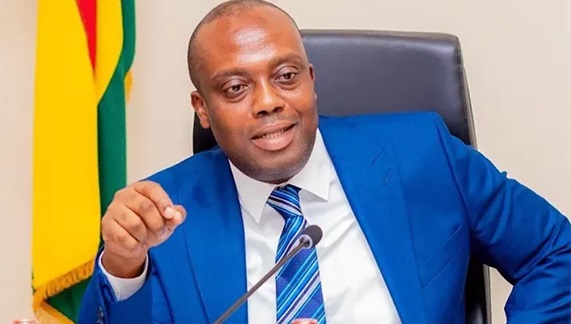
Speaking at the ACI Financial Market Association World Congress 2026 in Accra, Deputy Finance Minister Thomas Nyarko Ampem stated that Ghana’s recent economic reforms under the IMF-backed Extended Credit Facility programme have helped improve investor confidence, restore market stability, and strengthen perceptions of the country’s sovereign risk position after a challenging economic period.
According to him, the government’s reform agenda over the past 17 months has focused on stabilising the economy, rebuilding confidence among investors, strengthening public finances, and laying the foundation for long-term growth.
Ampem noted that recent evaluations by international credit rating agencies suggest that confidence in Ghana’s economy is gradually improving, which could help reduce borrowing costs and improve access to funding in the future.
He explained that fiscal discipline is closely connected to the strength of the financial sector, adding that weak government finances often create pressure on financial markets through rising borrowing costs, tighter liquidity, and declining investor confidence.
The deputy minister said restoring policy credibility and improving fiscal management are essential for rebuilding trust in the economy and attracting more capital flows into the country.
His comments come at a time when many emerging and frontier economies are facing challenges such as high global interest rates, geopolitical tensions, climate risks, and limited access to international financing.
Ampem also revealed that Ghana plans to move from the IMF-supported financing arrangement to a non-financing Policy Coordination Instrument, signalling a transition from economic stabilisation toward long-term growth and structural transformation.
He said the government’s “new economy agenda” seeks to shift Ghana away from an economy heavily dependent on raw material extraction toward one driven by value addition, productivity, competitiveness, and resilience.
A major part of the strategy involves building stronger financial markets capable of attracting both domestic and international long-term investment.
According to him, Ghana will require deeper bond markets, blended finance systems, venture capital, private equity investments, and sustainable finance mechanisms to support industrialisation, infrastructure projects, and technology-driven growth.
He added that the government wants local financial markets to support entrepreneurship, digital finance, and export-led industries while creating more opportunities for young people.
Ampem further stressed the need for African capital to support Africa’s own development, arguing that the continent currently receives only a small share of global investment flows despite its growing population, urbanisation, and expanding digital economy.
Referencing estimates from the African Development Bank, he said Africa faces an annual infrastructure financing gap of between US$68 billion and US$108 billion, which cannot be addressed by governments alone.
Meanwhile, Vice President Naana Jane Opoku-Agyemang highlighted the importance of trust, ethical standards, and strong institutions in developing resilient financial markets.
Speaking at the same conference, she said the global economy is still dealing with the effects of inflation, high interest rates, debt pressures, geopolitical uncertainty, and rapid technological changes.
According to her, strong economies cannot exist without reliable financial markets, and trust in those markets depends on competence, ethics, and effective institutions.
She also noted that discussions about financial markets must increasingly consider the role of artificial intelligence and digitalisation, as technology continues to reshape areas such as risk management, fraud detection, and financial decision-making.
While technology can improve efficiency and increase financial inclusion, she cautioned that regulators and governments must also address issues related to cybersecurity, accountability, and ethics.
The Vice President added that Ghana is working to strengthen domestic capital markets, improve foreign exchange systems, enhance transparency, and expand local currency financing to support long-term investment growth across Africa.
She further emphasised the importance of regional financial integration under the African Continental Free Trade Area, saying it will be crucial for improving Africa’s competitiveness and reducing fragmentation among African markets.
Source:thebftonline.com