

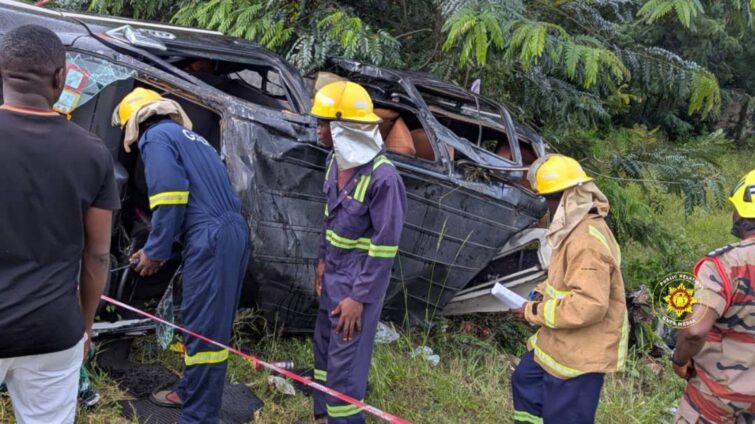
The National Road Safety Authority (NRSA) has raised fresh concerns over the safety of Toyota Voxy vehicles operating on Ghanaian roads, revealing that the vehicles record nearly three times the national average rate of road crashes.
According to the Authority, approximately 16 crashes are recorded for every 1,000 Toyota Voxy vehicles, compared to the national average of six crashes per 1,000 vehicles.
The figures, drawn from Ghana’s 2025 road crash statistics, suggest that Toyota Voxy vehicles face a disproportionately higher risk of involvement in road accidents.
NRSA Raises Alarm Over Toyota Voxy Crash Statistics
Speaking on Joy FM’s Super Morning Show, the Chairman of the NRSA’s Technical Working Committee, Dr Godwin Kwesi Ayetor, explained that the figures reveal a worrying trend requiring urgent attention.
He noted that although accidents involving Toyota Voxy vehicles account for less than one per cent of all recorded road crashes nationwide, their crash rate becomes significantly higher when measured against the number of such vehicles operating in the country.
This means that the relatively small proportion of Toyota Voxy crashes in national statistics does not necessarily indicate that the vehicles are safer.
Instead, the available data suggests that individual Toyota Voxy vehicles are involved in crashes at a rate approximately 2.7 times the national average.
Unsafe Vehicle Modifications Identified as Major Concern
Dr Ayetor identified several factors contributing to the elevated accident rate, including inappropriate vehicle usage, unsafe mechanical modifications, inexperienced drivers and financial pressures on commercial transport operators.
Of particular concern are Toyota Voxy vehicles converted from right-hand drive to left-hand drive configurations.
Such modifications may involve significant alterations to critical vehicle components, including steering mechanisms, braking systems, suspension structures and electrical installations.
Where these conversions are undertaken without proper engineering standards and certification, they can compromise vehicle safety and increase the risk of mechanical failure.
Toyota Voxy Vehicles Not Designed for Long-Distance Commercial Transport
The NRSA has previously warned that Toyota Voxy vehicles were primarily designed as family minivans rather than for demanding commercial passenger operations.
The Authority’s technical investigations also raised concerns about the suitability of these vehicles for long-distance travel, particularly on roads with challenging conditions.
According to the findings, the vehicles’ original design and relatively low ground clearance make them unsuitable for certain transportation activities commonly undertaken in Ghana.
Despite these concerns, Toyota Voxy vehicles continue to attract attention because of their use in passenger transportation across different parts of the country.
Driver Inexperience and Economic Pressures Worsen Safety Risks
Beyond mechanical concerns, the NRSA highlighted human and economic factors contributing to road accidents involving the vehicles.
Some commercial drivers reportedly operate under demanding financial arrangements that require them to meet substantial daily or weekly revenue targets.
These pressures may encourage speeding, excessive working hours and other unsafe driving practices.
The Authority also identified inadequate driving experience as a contributing concern, particularly when drivers operate vehicles under conditions for which they were not originally designed.
The combination of mechanical limitations, unsafe modifications and risky driving behaviour creates additional dangers for passengers and other road users.
Calls for Stronger Road Safety Regulations
The latest findings have renewed discussions about the need for stricter oversight of Toyota Voxy importation, vehicle conversions and commercial operations.
Road safety authorities have previously recommended improved technical inspections, stronger enforcement of vehicle registration requirements and measures to ensure that commercial passenger vehicles meet appropriate safety standards.
The NRSA’s findings reinforce the importance of addressing both mechanical and human factors in Ghana’s efforts to reduce road traffic accidents.
As concerns over road safety continue to grow, the Authority’s assessment highlights the need for greater public awareness, responsible vehicle operation and effective regulatory enforcement to protect passengers and motorists.
Source: MyJoyOnline