
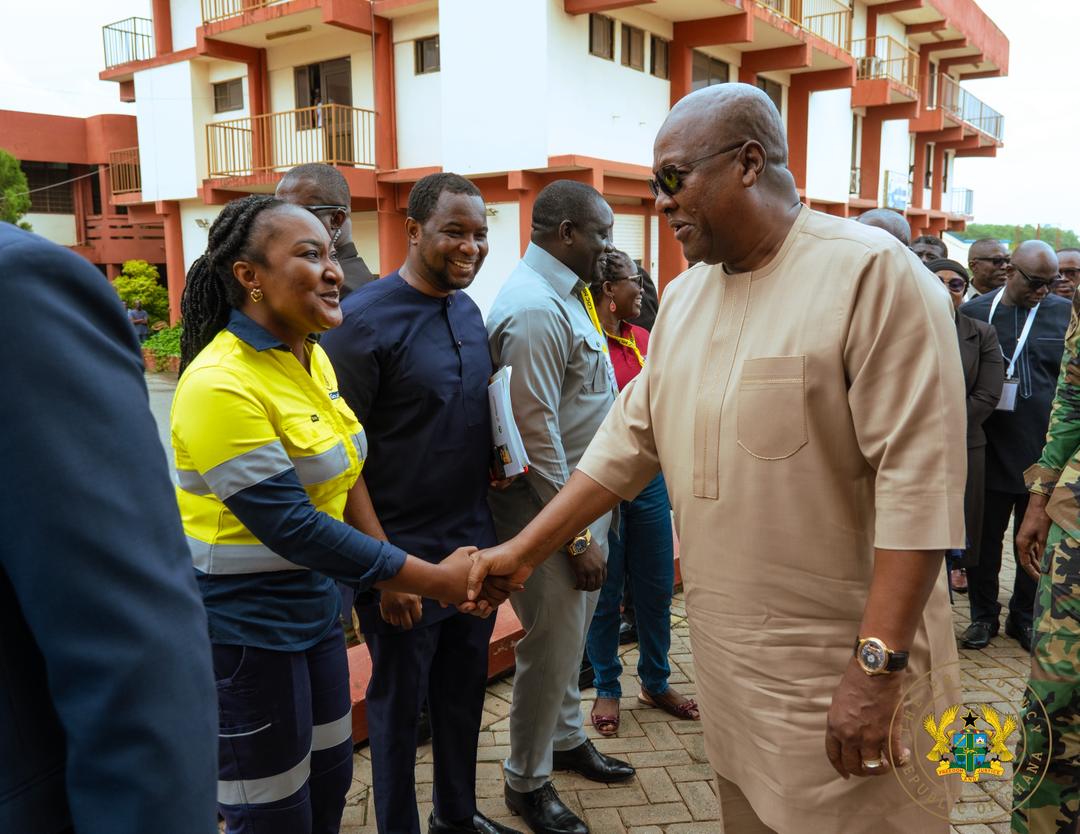
Speaking at the 4th Biennial Applied Research Conference of Technical Universities in Takoradi on Tuesday,
President John Dramani Mahama called on Ghana’s technical universities to align their academic programmes
with the government’s agenda of strengthening Science, Technology, Engineering, and Mathematics (STEM)
education.
He announced that each of the country’s ten public technical universities will receive GHS10 million in the 2027
national budget to improve infrastructure, laboratories, and equipment. According to the President, the investment
is aimed at helping the institutions fully achieve the vision behind the transition from polytechnics to technical
universities ten years ago.
President Mahama stressed that technical universities should become key drivers of Ghana’s knowledge-based
economy by prioritising practical training, industry partnerships, and strategies that address youth unemployment.
He encouraged the institutions to adopt a hands-on, competency-based approach to technical and vocational
education similar to the German model.
The President also revealed plans to establish two new technical universities in Jasikan in the Oti Region and
Techiman in the Bono East Region. In addition, a new University of Science and Technology will be created in the
Savannah Region to expand access to tertiary education, especially in northern Ghana.
To further support science and technical education, the government plans to introduce a TVET Fund aimed at
strengthening science-based learning nationwide. President Mahama explained that the new universities are
expected to build strong partnerships with industry to promote innovation and technological progress.
He noted that technical universities play a vital role in reducing unemployment by equipping students with
practical, job-ready skills. According to him, the broader objective is to produce more entrepreneurs and innovators
rather than graduates who rely solely on formal employment.



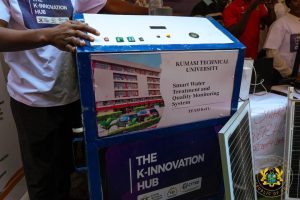

The President also referenced earlier investments made in modern engineering training facilities at the Takoradi
and Kumasi campuses. These projects included six laboratories at each institution, funded at a cost of $5 million,
covering areas such as electronics, advanced manufacturing, solar energy, and wind technology.