
A report by Ghana’s Finance Ministry on the management of the Energy Sector Support Account has revealed that revenue generated from the Energy Sector Shortfall and Debt Repayment Levy was insufficient to fully meet the country’s energy sector obligations in 2025, despite the introduction of an additional GH¢1 levy on fuel.
In April 2025, Parliament revised the ESLA framework by merging several existing charges—including the Energy Debt Recovery Levy, Energy Sector Recovery Levy, Sanitation and Pollution Levy, and Price Stabilization and Recovery Levy—into a single Energy Sector Shortfall and Debt Repayment Levy. The move was aimed at improving transparency, simplifying administration, and boosting revenue collection.
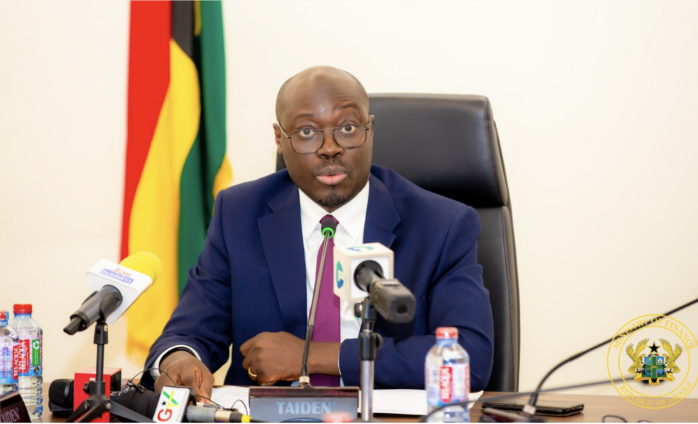
Two months later, the government increased the levy from 95 pesewas to GH¢1.95 per litre. According to Finance Minister Cassiel Ato Forson, the additional charge was intended to help reduce financing gaps in the energy sector, settle outstanding debts, and improve electricity supply reliability.
However, figures contained in the ministry’s 2025 report indicate that the levy alone could not cover the sector’s financial requirements. While the levy generated GH¢8.66 billion in revenue during the year, total energy sector expenditures reached GH¢22.67 billion, equivalent to approximately US$1.9 billion.
Major expenditures included GH¢5.46 billion for outstanding gas payments owed to Eni and Vitol, GH¢4.54 billion for settling legacy debts to Independent Power Producers, GH¢6.94 billion for restoring the World Bank Partial Risk Guarantee, and GH¢5.73 billion for procuring fuel and gas to sustain electricity generation.
As a result of the substantial gap between revenue and expenditure, the government provided additional support through the national treasury. The report shows that GH¢12.85 billion was transferred from the Treasury Main Account via the Controller and Accountant General’s Department to support the sector.
Of this amount, GH¢5.16 billion was allocated to cover ongoing energy sector shortfalls, while GH¢7.69 billion was used to settle accumulated legacy debts.
The findings come despite improvements in revenue collection within the sector. The report notes that the Electricity Company of Ghana is now fully complying with the Cash Waterfall Mechanism and no longer underreporting revenue. In addition, the relative stability of the Ghanaian cedi has helped reduce some of the exchange-rate pressures that have historically contributed to energy sector financing challenges.
The ministry noted that some of the major expenditures recorded in 2025 may not recur in future years. For instance, the restoration of the World Bank Partial Risk Guarantee was a one-off obligation, while ongoing efforts to improve compliance with the Cash Waterfall Mechanism and clear legacy debts could gradually reduce future financial burdens.
Government is also pursuing reforms within the power sector, including increased private-sector participation in ECG’s distribution operations and measures aimed at reducing technical and commercial losses.
Nonetheless, the outlook remains challenging. The 2026 Budget projects energy sector financing shortfalls of GH¢15.2 billion, up from approximately GH¢12 billion in 2025.
The figures suggest that while the increased levy has helped reduce the funding gap, it has not resolved the sector’s deeper structural issues. According to Finance Minister Ato Forson, longstanding challenges such as weak revenue collection, system losses, costly power purchase agreements, shortcomings in the implementation of the Cash Waterfall Mechanism, and inefficiencies across the energy value chain continue to undermine the sector’s financial sustainability.
The report concludes that although the additional levy has provided some financial relief, achieving long-term stability in the energy sector will require comprehensive structural reforms rather than relying solely on higher taxes and levies.
Source: myjoyonline.com