


The Executive Director of CAMFED Ghana, Fairuza Abdul-Rahman Safian, has raised concerns about persistent social barriers that continue to affect girls’ ability to complete their education, particularly in rural and deprived communities.
She said while access to education and gender parity at the basic and secondary levels had improved, girls continued to shoulder a disproportionate share of household responsibilities.
These include cooking, fetching water, caring for younger siblings and assisting their mothers with businesses.
According to Hajia Fairuza, the demands often leave girls exhausted and unable to concentrate fully on their studies, making social barriers a major challenge even when access to education has improved.
“The real challenge is not education access, but the social barriers. Girls will come to school, all right, but at the end of the day, they are the ones who are in the kitchen.”
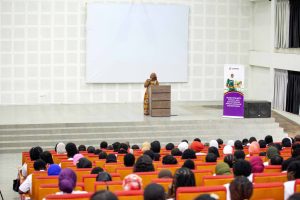
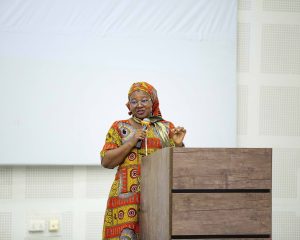
She made the remarks during the 2026 Tertiary Convening orientation for 791 young women benefiting from CAMFED Ghana’s tertiary education programme at the Kwame Nkrumah University of Science and Technology (KNUST) in Kumasi.
Call for shared household responsibilities
Hajia Fairuza called for a shift in traditional attitudes towards domestic responsibilities, urging families and communities to ensure that boys and girls share household chores.
She explained that the belief that women belong in the kitchen was partly shaped by an earlier division of labour, where men and boys worked on farms while women were largely responsible for domestic duties.
However, she said changing social and economic conditions required families to rethink those traditional roles.
“The narrative has changed, and so we also need to change the narrative.”
She urged parents to raise children with the understanding that household chores are responsibilities for both boys and girls.
According to her, sharing domestic duties would help prevent girls from being consistently disadvantaged while also contributing to changing perceptions about women’s roles in society.
CAMFED works with communities
The CAMFED Ghana Executive Director said the organisation works closely with communities in implementing its programmes and does not impose solutions on them.
She explained that CAMFED engages district-level authorities, chiefs, elders and other community leaders before introducing interventions.
“We just don’t go telling the communities we have arrived with the solutions. We do this in partnership with them.”
She added that the financial support provided to beneficiaries must be complemented by support from families and communities, including allowing girls to attend school and participate in extracurricular activities.
Hajia Fairuza also stressed the importance of partnerships, noting that CAMFED alone does not have all the solutions to the challenges confronting girls and young women.
Educating girls creates wider impact
She highlighted the broader benefits of supporting girls and young women to pursue education, saying beneficiaries were not only improving their own lives but also contributing to the development of their families and communities.
She cited the example of a beneficiary who, after receiving educational support, went on to establish a foundation to mentor and support others in her community.
“That is the multiplier we are talking about. That is why we say that when you educate a girl, everything changes.”
She said the achievements of beneficiaries demonstrated the importance of investing in girls’ education and creating opportunities for them to give back to their communities.
Hajia Fairuza also called for stronger action to promote gender equality, stressing that policies such as affirmative action must translate into practical changes in society.
She said promoting gender equality was not solely the responsibility of government but should begin in homes and communities.
“If we are asking a girl to wash plates today, the next day should be the boy. So they know it is a chore for children, not just girls.”
She said normalising shared responsibilities and exposing children to women’s leadership from an early age could help ensure that certain roles and responsibilities were not viewed as belonging exclusively to men.





Young women encouraged to embrace opportunities
The keynote speaker and Chief Executive Officer of Meannan Foods, Charity Maame Ekua Adupong, encouraged the young women to prepare themselves to make difficult choices in pursuit of their future goals.
She urged them to build connections, share experiences, learn from one another and have confidence in their abilities.
The week-long convening will focus on areas aimed at supporting the personal and professional development of the beneficiaries.
Topics include digital and productivity tools, goal setting and self-awareness, personal branding and grooming, financial decision-making tools, managing burnout and academic stress, as well as team-building skills.
The event also brought together alumnae and representatives from partner tertiary institutions, Amalitech and FAWE, who attended to provide partnership support for the convening.
source – www.citinewsroom.com