

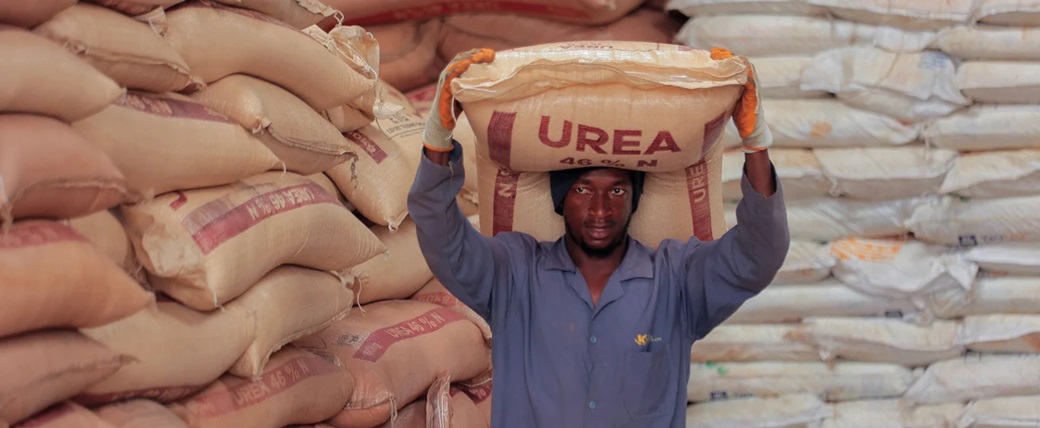
African governments have been urged to take urgent measures to address potential fertiliser shortages that could threaten food security across the continent due to ongoing tensions in the Strait of Hormuz.
The conflict involving the United States, Israel and Iran is disrupting global fertiliser trade routes, raising concerns that millions of African farmers could struggle to access critical fertiliser inputs such as ammonia, urea, phosphate and sulphur needed for food production in sub-Saharan Africa.
Experts warn that fertiliser shipments passing through the Strait of Hormuz account for nearly a quarter of global ammonia trade and more than one-third of seaborne urea shipments. Even minor disruptions or perceived risks in the region can lead to sharp increases in fertiliser prices, delays in shipments and rising food inflation worldwide.
The situation mirrors earlier crises experienced during the COVID-19 pandemic and the Russia-Ukraine war, both of which caused fertiliser prices to surge and exposed Africa’s heavy dependence on imported fertilisers and vulnerable global supply chains.
Currently, about 80 per cent of fertiliser used in sub-Saharan Africa is imported, often at significantly higher costs due to freight, logistics and financing challenges. As a result, African farmers are particularly vulnerable whenever global supply chains are disrupted.
Smallholder farmers, who produce nearly 70 per cent of food in sub-Saharan Africa, are expected to be the hardest hit. Unlike large-scale commercial farms, many smallholder farmers have limited access to fertiliser and are unable to absorb rising prices.
According to the Food and Agriculture Organization (FAO), a 10 per cent reduction in fertiliser availability could reduce maize, rice and wheat production in sub-Saharan Africa by up to 25 per cent, potentially triggering food inflation of as much as 8 per cent across the continent.
In response to earlier supply disruptions, the African Development Bank Group launched the US$1.5 billion African Emergency Food Production Facility in 2022. The programme has since supported nearly 16 million smallholder farmers in 35 African countries with climate-smart seeds and fertilisers, helping generate approximately 46 million tonnes of food valued at about US$19 billion.
The initiative has already delivered 3.5 million metric tonnes of fertiliser and is now moving into a second phase focused on strengthening long-term food sovereignty and reducing Africa’s dependence on emergency interventions.
Key Measures Recommended
Experts and policymakers are calling for action across five major areas to help Africa manage both the immediate and long-term risks linked to fertiliser supply disruptions.
First, governments are encouraged to improve market intelligence systems through real-time monitoring of fertiliser trade flows, shipping routes and price movements. Better regional data-sharing is expected to help countries anticipate shortages and coordinate responses more effectively.
Second, African countries are being advised to coordinate regional fertiliser procurement and establish buffer stocks. By pooling demand, countries could negotiate lower prices and reduce exposure to export restrictions and freight increases. Partnerships with major African fertiliser producers such as Morocco and Nigeria are also expected to help stabilise regional markets.
Third, there are renewed calls for African governments to accelerate domestic fertiliser production. Countries including Morocco, Nigeria, Kenya and Ethiopia are already expanding manufacturing and blending capacity, but experts say production levels still fall short of continental demand.
Investments in blending plants, transport infrastructure and alternative fertiliser solutions such as organic fertilisers and soil-specific nutrient management are also being encouraged.
Fourth, policymakers are being urged to protect smallholder farmers through targeted subsidies, digital voucher systems and improved access to seasonal credit to reduce the impact of rising global prices.
Finally, stakeholders are calling for stronger support for the Africa Fertiliser and Soil Health Initiative, adopted during the African Union-hosted Africa Fertiliser and Soil Health Summit in 2024.
The initiative’s ten-year action plan aims to restore degraded soils, increase fertiliser use, boost agricultural productivity and double cereal yields across the continent.
Development partners have also highlighted the importance of collaboration. The World Bank’s “AgriConnect” programme, launched in 2025 in partnership with the African Development Bank Group and other organisations, is expected to support farmers through digital farming advice, climate-smart agriculture and improved access to credit and farm inputs.
Analysts say the ongoing tensions in the Gulf region demonstrate how disruptions in global shipping routes can quickly affect food prices and food security in Africa, underscoring the need for stronger regional cooperation and long-term investment in agricultural resilience.
Source: 3news.com