
The Government of Ghana has intensified efforts to build its foreign exchange reserves by engaging major mining companies under the Ghana Accelerated National Reserve Accumulation Policy (GANRAP).
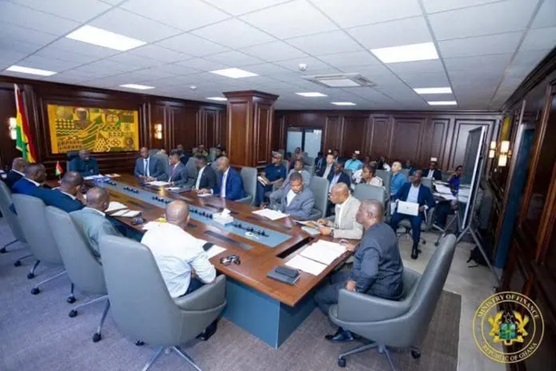
The high-level meeting was led by Finance Minister Cassiel Ato Forson and Lands and Natural Resources Minister Emmanuel Armah Kofi Buah. It brought together key industry players, including the Chief Executive Officer of the Ghana Gold Board, Sammy Gyamfi, as well as officials from the Minerals Commission.
During the discussions, Dr Forson emphasized that GANRAP is designed as a collaborative initiative rather than a measure against the mining industry, describing it as a partnership aimed at strengthening the country’s economy.
The policy targets weekly gold purchases of about 3.02 tonnes. Out of this, approximately 2.45 tonnes will be sourced from small-scale miners through the Gold Board, while at least 0.57 tonnes will come from large-scale mining firms under the state’s pre-emption rights, with payments made in local currency.
Currently, Ghana’s reserves cover about 5.7 months of imports. The government aims to increase this to 8.6 months by the end of 2026, 11.8 months by 2027, and 15 months by 2028, requiring significant annual additions to reserves.
Officials say the involvement of large-scale mining companies is crucial to achieving these targets, as their production forms a key part of the accumulation strategy under the Ghana Gold Board Act.
The Ministry of Finance has argued that the gold-based approach is more cost-effective than relying on external borrowing. In 2025, the Gold Board reportedly generated about $10 billion in foreign exchange at a relatively low operational cost compared to previous reliance on Eurobonds and currency swaps.
Dr Forson noted that reforms are underway to improve gold acquisition processes while ensuring stronger regulation and compliance within the mining sector. He added that the policy is aimed at boosting reserves and supporting currency stability.
Gold acquired through the programme will be refined and added to national reserves, with any future sales requiring approval from both Cabinet and Parliament.
However, the policy has sparked debate in Parliament, with some Minority members questioning whether it represents a new approach or a continuation of earlier reserve-building strategies.
Source: newsghana.com.gh